
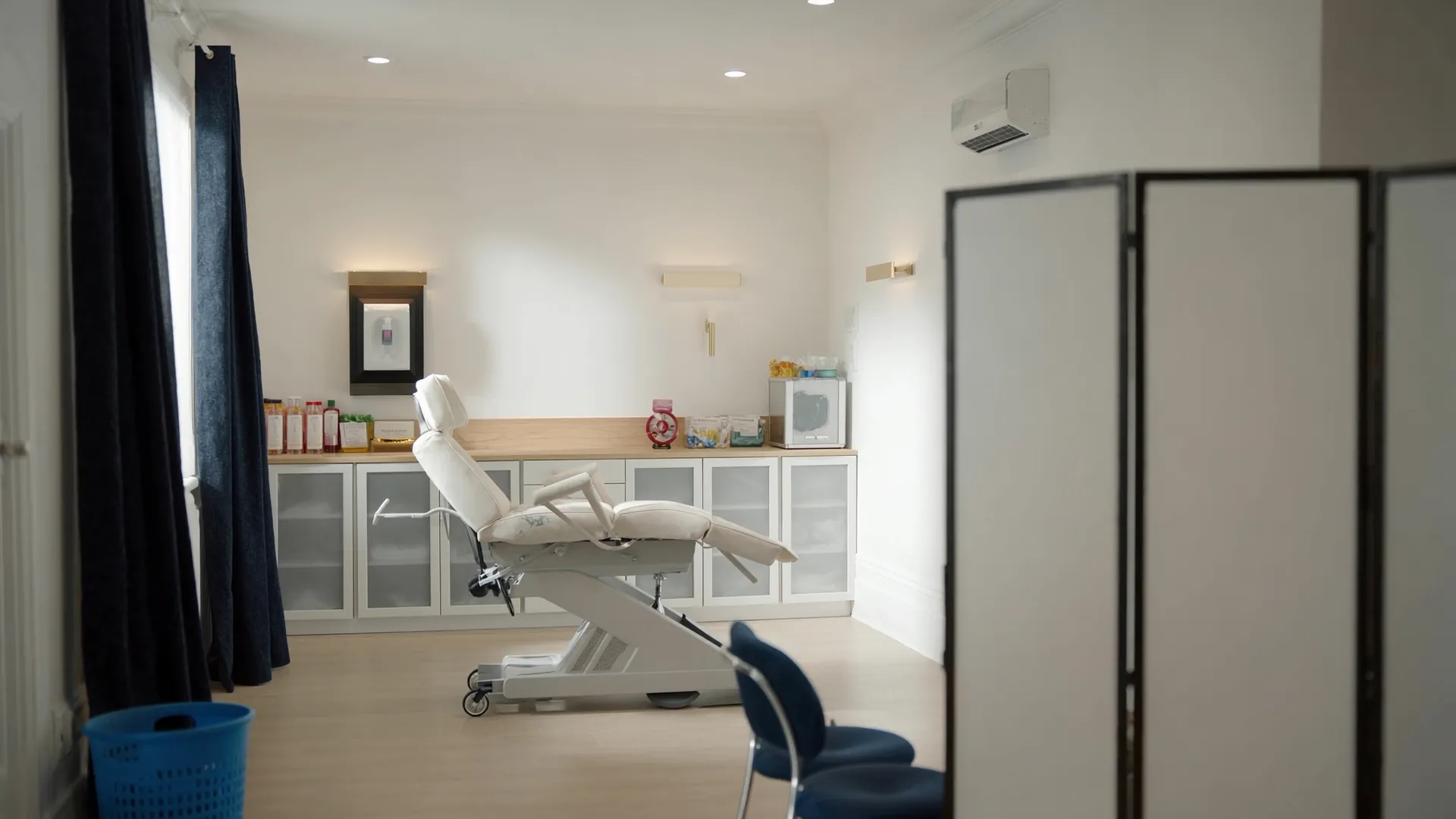
Hair Transplant · Harley Street
Hair Transplant Clinic in London
Sapphire FUE hair transplants at 19 Harley Street, planned and performed by Turkish, GMC-registered hair transplant surgeons: Turkish hair transplant expertise under UK regulation and aftercare.
Finance available on the full cost, 0% APR up to £2,000 with Klarna (subject to status)
A hair transplant moves your own hair from the back and sides of the scalp, where growth is permanent, to areas that have thinned or receded. Because the relocated follicles keep their original resistance to hair loss, the result is lasting rather than temporary.
At Liv Hair & Skin Clinic we use follicular unit extraction (FUE), including the Sapphire technique, to place grafts individually for a natural hairline and density. Every treatment starts with a face-to-face assessment, not a fixed package sold in advance.
What is Sapphire FUE, and how does it differ from standard FUE?
FUE removes hair follicles one at a time using a fine punch, then places them into the thinning area. There is no linear scar, unlike the older strip (FUT) method, so healing is quicker and short haircuts stay discreet.
The Sapphire variation uses blades made from sapphire crystal to open the recipient sites. The finer, smoother channels can allow denser, more precise placement and a slightly faster recovery. Which approach suits you depends on your hair type, the area treated and your goals, all confirmed at consultation.
Do you offer a no-shave hair transplant?
Yes. Where it suits the case we use DHI (Direct Hair Implantation), which places each graft directly through the existing hair without shaving the recipient area. It is our standard approach for female hair transplants and for beard and moustache work, and it lets many patients treat thinning discreetly.
DHI is more meticulous and takes longer than a shaven FUE procedure, so it is planned around your hair length, the area treated and the density you want. Whether a shaven or no-shave approach is right for you is confirmed at consultation.
How much does a hair transplant cost in London?
Our pricing is fixed by package and technique, so you know the cost up front. A smaller session (up to 3,000 grafts for men, or up to 1,500 grafts for women and beard work) is £3,500 with FUE or £4,200 with DHI. A larger session is £4,450 with FUE or £5,150 with DHI. DHI is the no-shave option many women choose, and it costs a little more.
Your package and the number of grafts you actually need are confirmed at a face-to-face assessment. You can spread the cost with Klarna at 0% interest up to £2,000, subject to status and eligibility (Klarna is the credit provider). See the options in the grid below, or ask for a tailored quote at your consultation.
Is a UK hair transplant worth it compared with Turkey?
Our answer is that you should not have to choose between Turkish expertise and UK safety. Our hair transplant surgeons are Turkish and GMC-registered: they bring the technique and volume of experience Turkey is known for, delivered here under UK medical regulation, with local aftercare and straightforward follow-up if you ever have a concern.
Turkey is cheaper, but the difference is not only price. Correcting an over-harvested donor area or an unnatural hairline from abroad often costs more than doing it well once. For many patients the value is in that combination: Turkish-trained hands, GMC oversight, continuity of care, and an honest assessment of whether surgery is even the right step, because some people are better served by non-surgical options first.
What does recovery involve?
Most people return to desk-based work within 3 to 5 days. Small scabs form around each graft and typically clear within 10 to 14 days. Redness settles over a week or two, and you can usually resume exercise after about two weeks.
Transplanted hairs shed in the first few weeks, which is normal. New growth begins from around three to four months, with the fuller result visible by 9 to 12 months.
What every hair transplant package includes
- Two sessions of regenerative hair growth treatment, one applied during your procedure
- UK-based patient support throughout your journey
- Post-operative medication
- Complimentary aftercare pack
Every package is surgeon-led and performed in house at 19 Harley Street. Full details and a tailored plan are confirmed at your free consultation.
Surgeon-led, in house. Not a booking agent.
Broker / outsourced clinic
- You meet a salesperson; the procedure is outsourced to an unknown team
- Hairline designed by a technician
- Little accountability if the result disappoints
- Aftercare ends when you fly home
Liv Hair & Skin Clinic
- Your assessment and surgery are led by our own GMC-registered surgeon
- Hairline designed and placed under a doctor’s plan
- Full GMC regulation and CQC oversight, with recourse and revision
- Follow-up and aftercare with the same team at 19 Harley Street
Explore this clinic
- Scalp Micropigmentation in London (SMP) →
- Male Hair Transplant in London →
- Women's Hair Transplant in London →
- Eyebrow Transplant in London →
- Beard Transplant in London →
- Moustache Transplant in London →
- Hair Loss Treatments in London →
- Regenerative Hair Growth Treatment in London →
- Advanced Regenerative Hair Treatment in London →
- Hair Mesotherapy in London →
- Hair Transplant in the UK vs Turkey →
- The Norwood Scale: Stages of Male Hair Loss →
- What Causes Hair Loss? →
- Male Pattern Baldness →
- Female Hair Loss →
- Alopecia Areata →
- Traction Alopecia →
- Crown Thinning & the Vertex →
- Receding Hairline →
- Hair Transplant for Scars: Cleft Lip, Surgical & Burn →
- FUE vs DHI Hair Transplant →
- Hair Transplant Cost in London →
- How Many Grafts Do I Need? →
- Hair Transplant Recovery →
- Hair Transplant Results: Month by Month →
- Afro & Curly Hair Transplant →
Treatments & pricing
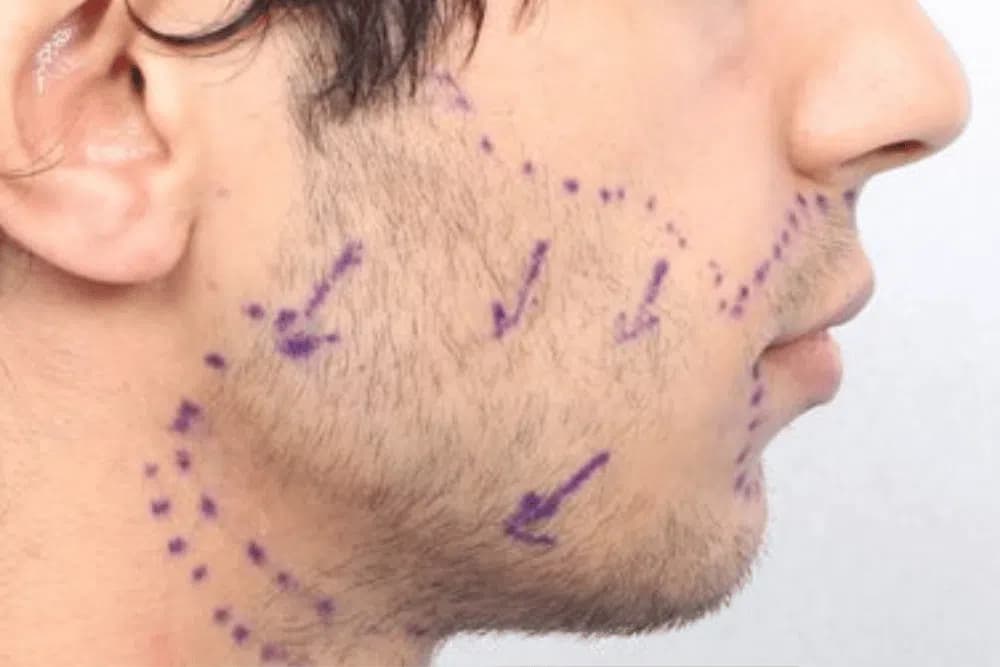
Beard DHI Transplant
£4,200View treatment →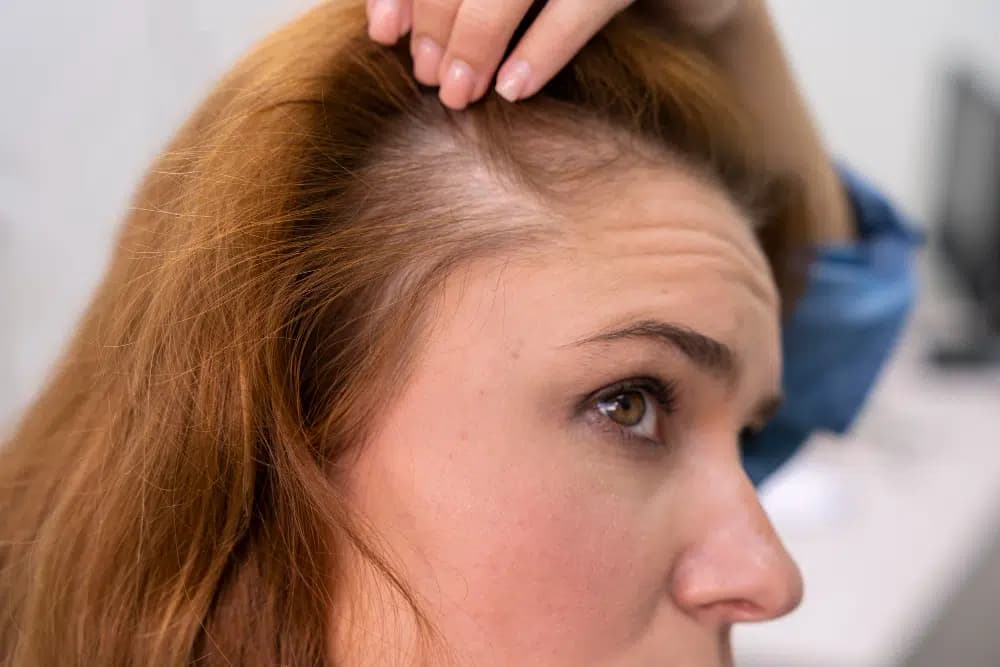
Female DHI Hair Transplant
£4,200View treatment →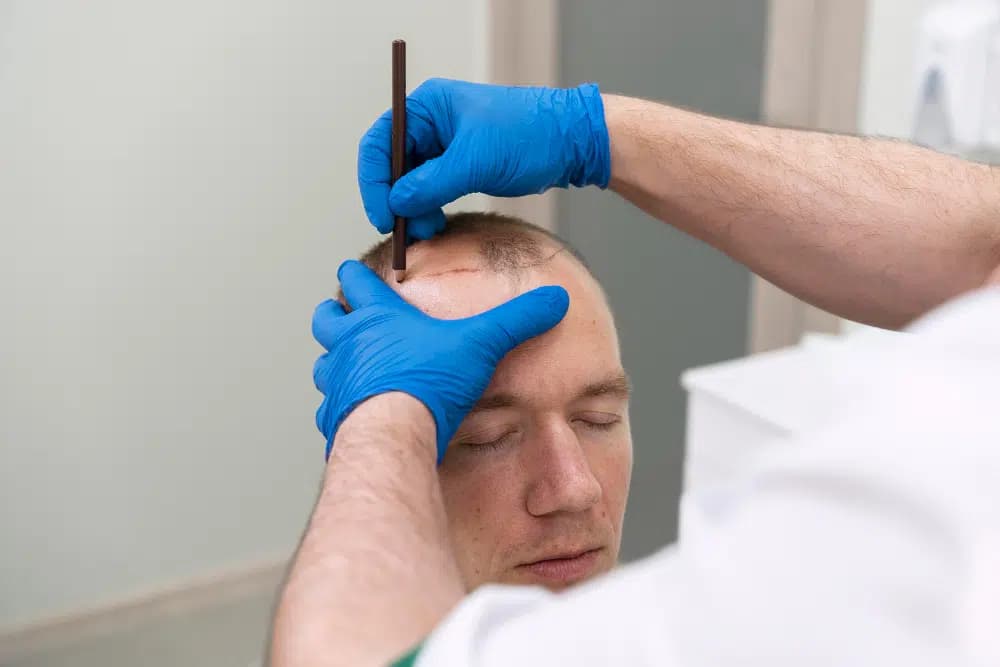
Male DHI Hair Transplant
£4,200View treatment →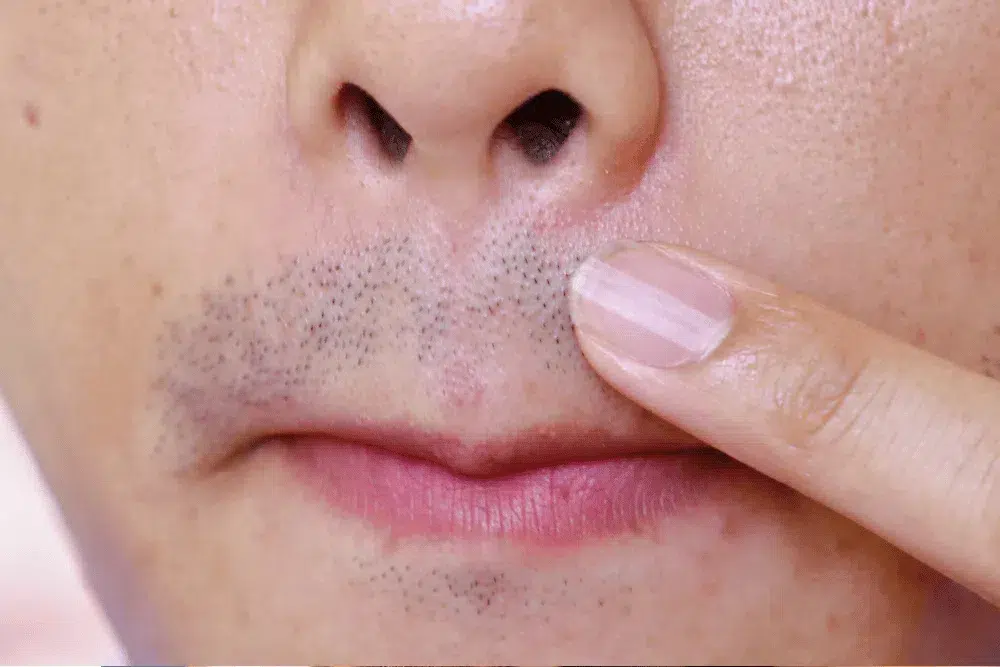
Moustache Transplant
£1,500View treatment →Beard FUE Transplant
£3,500View treatment →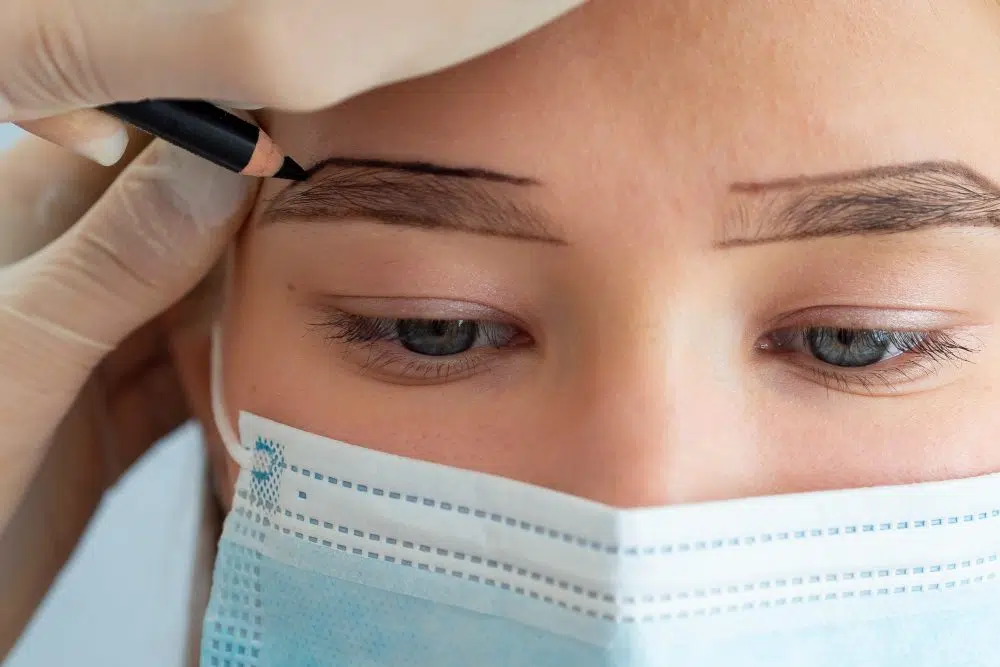
Eyebrow Transplant
£1,500View treatment →Female FUE Hair Transplant
£3,500View treatment →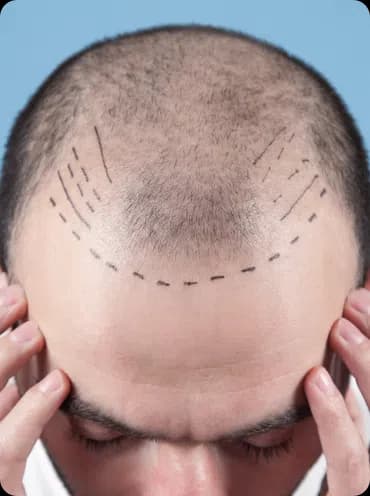
Male FUE Hair Transplant
£3,500View treatment →
Prices are a guide. Your treatment is confirmed at a private consultation.
Before & after
See all results →Hair Transplant · Frontal hairline
Female Hair Transplant · Hairline and parting
Hair Transplant · Temporal hairline
Female Hair Transplant · Hairline & temples · DHI
2,600 grafts. A congenitally high hairline brought down to a natural position, with both temple points reconstructed. Female DHI, no head shave.
Female Hair Transplant · Hairline & sides · 6 months
1,800 grafts. Dense side gaps and a thinning front restored after trichotillomania (hair-pulling), shown at six months. Grafted without shaving the hair.
Hair Transplant · Front & crown
5,000 grafts. Front and crown restored together in one large session (areas 1-2-3-5-6). Male hair transplant.
Hair Transplant · Full scalp
4,000 grafts. Extensive thinning treated by spreading density across the whole area with a stronger front. Male hair transplant.
Hair Transplant · Frontal hairline
2,700 grafts. Early recession at the corners (areas 1-2) rebuilt and the hairline repaired, without lowering it. Male hair transplant.
Hair Transplant · Crown & mid-scalp
3,500 grafts. Mid-scalp and crown density restored across a larger area. Male hair transplant.
Female Hair Transplant · Hairline · 8 months
1,800 grafts. A naturally high, uneven hairline brought down and reshaped, shown at eight months. Female hair transplant.
Scalp Micropigmentation · Full scalp
by Filippo Peranzani
A receding, patchy hairline given a defined, closely shaved look with even tone. Scalp micropigmentation.
Scalp Micropigmentation · Full scalp
by Filippo Peranzani
Diffuse thinning across the top reworked into the appearance of a full, closely shaved head. Scalp micropigmentation.
Scalp Micropigmentation · Crown and hairline
by Filippo Peranzani
A faded cut with a thinning crown given added density and a sharper hairline edge. Scalp micropigmentation.
Scalp Micropigmentation · Crown
by Filippo Peranzani
Density blended into existing hair to disguise a thinning vertex. Scalp micropigmentation.
Scalp Micropigmentation · Hairline and temples
by Filippo Peranzani
Receded temples and hairline rebuilt into a natural, defined shape. Scalp micropigmentation.
Scalp Micropigmentation · Full scalp
by Filippo Peranzani
An uneven, scarred scalp given an even, natural closely shaved appearance. Scalp micropigmentation.
Scalp Micropigmentation · Full scalp
by Filippo Peranzani
A bald, uneven crown given dense, even coverage. Scalp micropigmentation.
Scalp Micropigmentation · Hairline detail
by Filippo Peranzani
Close detail of a micropigmented hairline blending into a shaved scalp. Scalp micropigmentation.
Scalp Micropigmentation · Women's density
by Filippo Peranzani
Female scalp micropigmentation: density built through the parting and hairline to reduce scalp show-through, blended softly under the hair. Scalp micropigmentation.
Scalp Micropigmentation · Added density (hair kept)
by Filippo Peranzani
Density built into thinning hair without shaving, reducing scalp show-through while keeping length. Scalp micropigmentation.
Scalp Micropigmentation · Transplant scar camouflage (FUT)
by Filippo Peranzani
A linear FUT hair transplant scar softened by blending pigment into the surrounding hair. Scalp micropigmentation.
Scalp Micropigmentation · Transplant scar camouflage (FUE)
by Filippo Peranzani
Dot scarring from FUE surgery blended into the donor area for a more even look. Scalp micropigmentation.
Scalp Micropigmentation · Injury scar camouflage
by Filippo Peranzani
An injury scar on the scalp softened by matching pigment to the surrounding hair pattern. Scalp micropigmentation.
Scalp Micropigmentation · Alopecia density
by Filippo Peranzani
Patchy hair loss given even, natural-looking density. Scalp micropigmentation.
Scalp Micropigmentation · SMP refresh
by Filippo Peranzani
Faded scalp micropigmentation refreshed to restore depth, contrast and a sharp hairline. Scalp micropigmentation.
Real patient results, shared with consent. Individual results vary; a personal consultation is required.
60-second estimate
How many grafts do you need?
Answer three quick questions for an indicative hair-loss stage and graft range, then get a free photo assessment from our surgeon.
Step 1 of 3
Who is this for?
Frequently asked questions
How many grafts will I need?
It depends on the area and the density you want. A receding hairline may need 1,500 to 2,500 grafts, while more advanced loss can need 3,000 to 5,000. We assess your donor area and scalp in person and recommend a graft count based on your case, not a fixed package.
Is a hair transplant painful?
The procedure is done under local anaesthetic, so you should not feel pain during treatment. Most patients report only mild soreness or tightness for a day or two afterwards, managed with simple painkillers. You stay awake and comfortable throughout, and can usually travel home the same day.
Are the results permanent?
Yes. Follicles taken from the back and sides of the scalp are genetically resistant to the hormone that causes pattern hair loss, so they keep growing in their new position. Existing non-transplanted hair can still thin over time, which is why we may also discuss maintaining it.
Am I a suitable candidate?
Good candidates have a stable area of hair loss and enough healthy donor hair. Age, hair type and the pattern of loss all matter. The only way to know is an in-person assessment, where we also tell you honestly if surgery is not the right option for you yet.
Related
Speak to our team
Every treatment begins with a free, no-obligation consultation at 19 Harley Street. We assess you in person and give honest advice on what suits you.
Medically reviewed by Dr Sumeyye Yuksel, MBBS · 24 July 2026